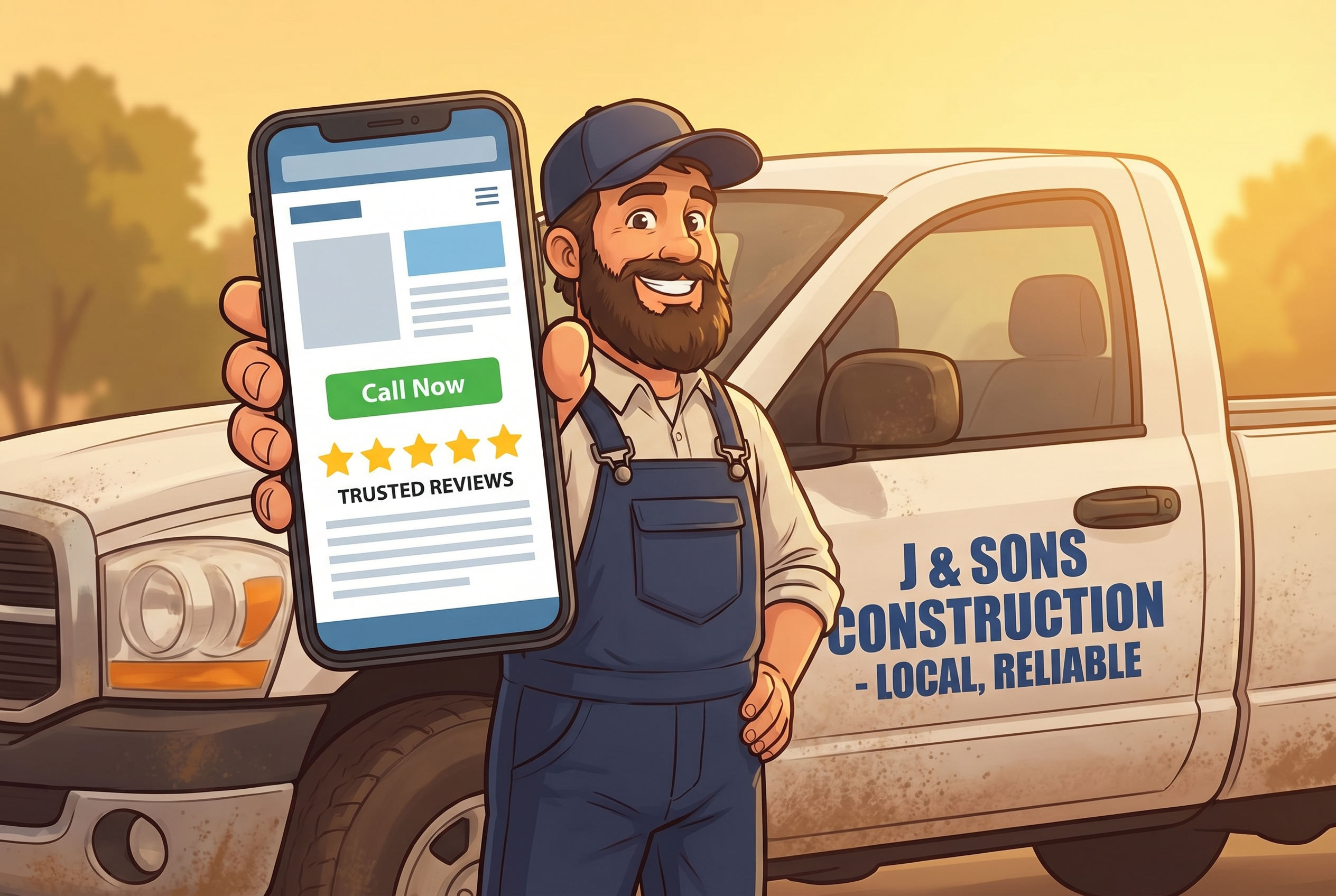
The "Brochure" Trap
Most tradespeople think they need a massive, 10-page website with an "About Us" page, a "Mission Statement," a blog they never update, and a complex contact form. They spend $3,000 on a web designer, wait two months, and end up with a digital brochure that looks pretty but doesn't actually get the phone to ring.
Here's the truth: homeowners don't care about your mission statement. When a pipe bursts, the AC dies in July, or they finally decide to remodel the kitchen, they only care about three things:
- Can you fix my specific problem?
- Are you local and reliable?
- How do I get you to my house right now?
A simple, highly optimized one-page website answers those three questions instantly and converts visitors into paying customers far better than a bloated site.
The Anatomy of a High-Converting One-Page Site
Your website has one job: get the customer to call you or fill out a lead form. Every element on the page should drive them toward that action. Here is the exact structure of a one-page website that gets you booked solid.
1. The Hero Section (Above the Fold)
This is what people see before they scroll. You have about 3 seconds to convince them they are in the right place.
- The Headline: Clear, not clever. State exactly what you do and where you do it. (e.g., "Emergency Plumbing Services in Austin, TX" or "Custom Deck Builders in Seattle.")
- The Subheadline: A brief sentence explaining why they should choose you. (e.g., "Licensed, insured, and arriving on time since 2015.")
- The Call to Action (CTA): A massive, unmissable button. "Call Now for a Free Estimate" or "Book Online." Make the phone number clickable so mobile users can just tap it.
- The Background: A high-quality photo of you or your crew working, or your branded truck. Do not use stock photos of generic models in hardhats. People want to see who is coming to their house.
2. The "Services" Section (What You Do)
Keep it simple. Use bullet points or a short list of your core services. Don't list every single minor repair you've ever done. Focus on the high-margin jobs you actually want.
- Water Heater Repair & Replacement
- Drain Cleaning
- Leak Detection
- Fixture Installation
3. The "Trust" Section (Why You)
Homeowners are terrified of getting ripped off by a contractor. You need to build trust immediately.
- Badges: Display logos for your license, insurance, BBB accreditation, or local chamber of commerce.
- Reviews: Embed 3-4 of your best 5-star Google reviews. Real names, real quotes.
- Guarantees: If you offer a "100% Satisfaction Guarantee" or "Upfront Pricing," put it here in bold.
4. The "About Us" (Keep it Brief)
A short paragraph (3-4 sentences) about your local roots. "We are a family-owned business serving the Austin area for 10 years. We treat your home like our own." Include a photo of the owner or the team.
5. The Final CTA & Contact Form (The Closer)
End the page with another strong push to contact you.
- Repeat the phone number (make it huge).
- Include a simple contact form: Name, Phone, Email, and "Describe your project." Don't ask for their life story; the more fields you add, the fewer people will fill it out.
- List your service area (cities/counties) and hours of operation.
Why One Page Wins
Mobile Optimization: Over 60% of local service searches happen on a phone. A one-page site is built for scrolling. Users just swipe down, read the pitch, and tap the call button without having to navigate clunky menus.
Speed: One-page sites load incredibly fast. If your site takes more than 3 seconds to load, the customer will hit the back button and call the next guy on Google.
Focus: There are no distractions. You aren't sending them to a dead blog or a confusing "Our History" page. You are funneling them directly to the contact form.
The Bottom Line
You don't need a complex website to run a successful trades business. You need a digital business card that builds trust and makes it stupidly easy for people to give you money. Build a clean, fast, one-page site, optimize it for local SEO, and watch your schedule fill up.